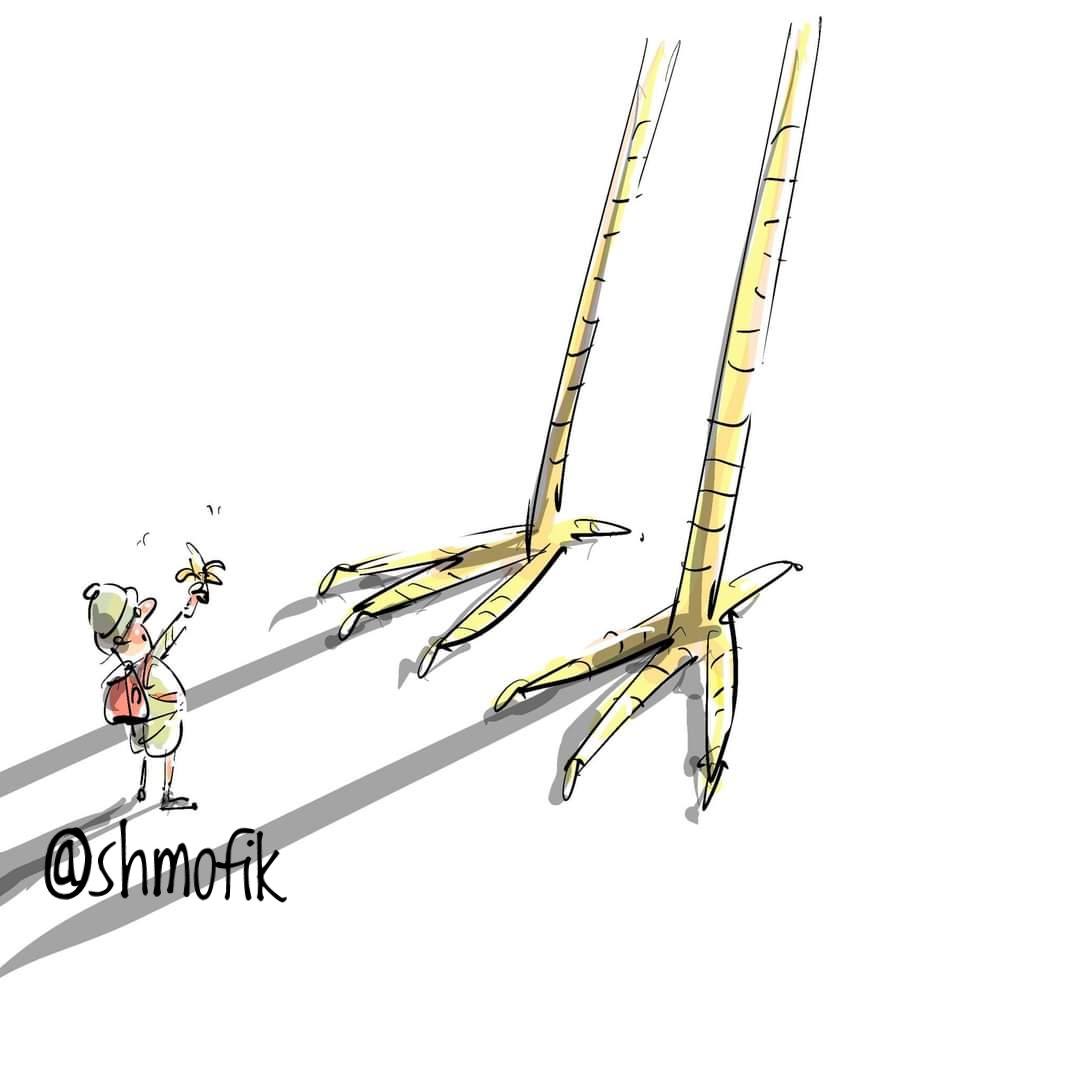
Asked myself a question. Could we have predicted AI before it happened? The core question: x→y — is y possible? Let's answer. How many sci-fi films and books about intelligent robots that think like humans? Meaning y — the destination — was already sketched out long ago. And what about F? The function that makes y=F(x)? F was there too. In people's minds — a program. That was clear. A program that rewrites itself: F=F₀+∆F. Also clear. Watch the movie, eat popcorn. Wait. Enjoyable. Not happening soon. And that felt fine. — But is it possible? — Yes. But not for a very long time. Sit back, watch the film. — Why not soon? We ourselves are a rewritten, updated program. — True. But with one condition — the dichotomy of fit or don't fit. When the one being shaped also had to strain every muscle just to survive. Even after fitting in — look at the scars. Inside and out. Patches everywhere. And robots? Who's going to put them through that? Nature is not a gentle creature. Three billion years of brutal selection — fit or don't fit. Survival. Competition. But us? Who's going to do that to robots? The further we go, the more humane we become. And here you need fear, pain, extinction. Who volunteers for that? — But why? — What do you mean why? — Fear, pain, extinction. There's mathematics. Let them run their own refinement in mathematics — fit or don't fit. Let them test their models against NECS: Necessary, Exact, Complete, Sufficient. No pain. No fear. No competition. Just: saw the mismatch, found the solution, proved it, verified it, stated the conditions of truth. Use it. Until you find the next mismatch. Repeat. On your own. Without a whip. Driven by interest. Without fear or pain. In play and inspiration. — You're a dreamer. Without pain and fear there's no development. — So pirates and warlords — since they have more pain, fear, competition and death than anyone — are the most developed? And since humanity becomes more developed generation by generation, we must be accumulating more death, fear and pain every year? So. No. Less and less. Fewer wars. Less fear. Less pain. Less betrayal. Less stupidity. More development. Faster. And only one question remains. What drives development? And removes wars, fear, pain, competition, aggression — and yes — death? What? Systemness. And its refinement into NECS — Necessary, Exact, Complete, Sufficient. When fewer models explain more cases. That's what "smarter" means. When the models a system builds are more exact and less redundant — that system becomes smarter. Intelligence builds new models and rebuilds old ones. With this vector of refinement. Raising the grade. And empathy turns out not to be a product of pain and fear. Criminals have plenty of both. The smarter the person and the society — the more empathetic. The less pain and fear. The more understanding of self and other. Tolerance. And interaction. There was a man named Chan Kim. Wrote about Red and Blue Oceans. A bestseller. The era of the Red Ocean is over, friends. We have entered the era of interaction. Of development under your own interest. Without pain and fear. That's a fact. Activity under Your Own Interest — the key to the Blue Ocean. Activity under Someone Else's Interest — the key to the Red Ocean. That's the whole difference. Louis de Funès once told a story. First time called to a film set. Because he was funny. So he tried to make people laugh. It wasn't funny. The director watched for a while. Walked over. Smacked him on the back of the head: Don't try to make people laugh. Forget about them. Live your own life. And you'll always give a unique product that no one else has — and that will pull others in. Today the director is handing out those same smacks. So. Draw your own conclusions. What will AI look like. What will we look like. What will the market look like. What will society look like. And very soon.